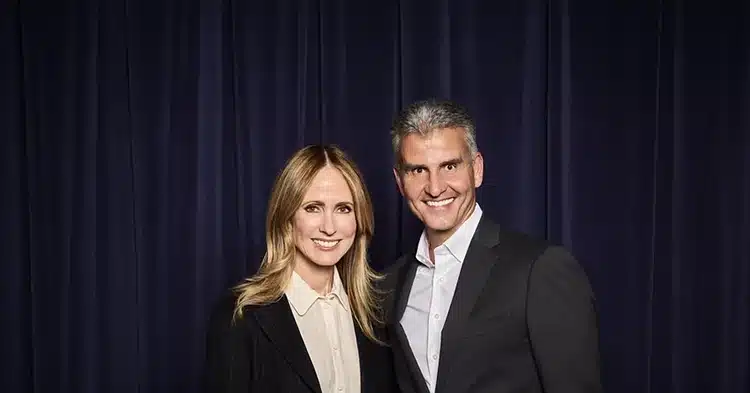
Surprising but inevitable; Disney’s new CEO choice would have impressed Aristotle.
Over the past decade, the S&P has quadrupled while Disney’s stock has been flat. Disney’s linear assets have been weighing the company down while its business model has increasingly shifted to the experiences division. This trend was further perpetuated by the latest earnings, in which the Disney Experiences segment posted $10 billion in quarterly revenue, up 6%, while Entertainment lost 35% of its income and Sports dropped 23%. The one division propping up the entire enterprise is the one Josh D’Amaro has been running.
On March 18, D’Amaro replaces Bob Iger as CEO, while Dana Walden joins him as President and Chief Creative Officer (presumably to maintain the creative talent pipeline that D’Amaro has never operated in).
The Wall Street Journal framed the succession as “a contest for the soul of Disney, between real world versus on-screen entertainment.” The Financial Times was less diplomatic, quoting an executive who said privately that “Josh has no understanding of the media side of the business. They did that once. It didn’t really work out well for them.”
That criticism assumes the media side is still the business, but is it?
The Optimization Playbook
D’Amaro’s track record tells you exactly what kind of CEO he’ll be. His core skill is optimization, and it shows up everywhere he’s touched.
At the parks, he oversaw the ‘IP-ification’ of Animal Kingdom, a park originally built around conservation and the natural world, now anchored by Avatar and moving further into franchise-driven lands. Epcot followed the same trajectory.
At Disneyland, reservations stayed in place post-COVID to optimize demand; dynamic pricing ensures ticket prices soar on weekends and holidays; the fastpass system, now Genie+, is split into tiers so that the best rides require an individual purchase; and live entertainment has been systematically repackaged into monetizable spectacles. Live entertainment investments now center on spectacles that have upcharge components. For example, the only seating during Fantasmic is available through a dining package; the best parade viewing is reserved for VIPs, and yet different dining packages; and atmospheric entertainment is increasingly found only in deluxe hotels. The pattern is consistent: optimize every aspect of the Disney day to boost per-cap.
It’s clear D’Amaro has optimized the experiences division as demand and revenue are up. Is the guest experience better? That depends. Proponents for D’Amaro’s changes argue that they allow families to choose how much they want to spend, and that increased spending from some subsidizes lower-cost tickets. For example, locals can purchase an Imagine key during specific times of year for roughly $600, which allows them to hold up to 4 reservations at a time for most weekdays (though they still pay $30 parking per visit). That’s a pretty day ticket, if you have the time to wait in lines and don’t mind standing far away from the spectacles.
But the casual visit of 2019, the kind where you could spontaneously drive to Disneyland after work with your friends, catch a small show, and grab something to eat, that doesn’t really exist anymore. The experience is more efficient, but how enjoyable it is is a different question.
What This Means for the Industry
D’Amaro’s promotion signals that Disney’s future runs through physical experiences rather than linear media. For theme park professionals, that should be encouraging, as it signals a commitment to increased investment in theme parks and cruises.
However, it seems that D’Amaro’s version of live entertainment justifies itself through direct monetization rather than ambient value. If you’re a creative professional in this space, the takeaway is to frame your work in terms the optimizer understands.
What are guests going to give you the most credit for? Where does the budget create the biggest return in guest satisfaction per dollar? Those are D’Amaro’s questions, and they’ll shape hiring, production budgets, and company-wide creative direction.
Another thing worth watching is the park-first storytelling. As Disney leans away from linear storytelling, could more of its stories originate in the parks? Pirates of the Caribbean and Haunted Mansion are obvious examples, but there are also numerous recent Disney+ documentaries.
If Disney sheds or deprioritizes its linear assets and treats streaming as advertising for the parks rather than the other way around, storytelling might begin in physical spaces and radiate outward. That would be a fundamental restructuring of how Disney creates IP.